
POWER QUALITY ANALYSIS
Table of Contents
Power Quality Analysis
Power quality analysis is the assessment of electrical power supplied to a facility in order to determine how it affects connected equipment and overall system performance. Variations in voltage, current, harmonics, and load balance can cause negative impacts on sensitive electrical and electronic systems if left unnoticed.
In today’s installations where VFDs, UPS systems, PLCs, automation controls, and IT equipment are widely used—maintaining good power quality is essential. Even minor disturbances in power can result in equipment malfunction, efficiency loss, equipment failure, particularly in high load operating environments.
Why It Matters
Power quality refers to a clean, stable & consistent electrical power running through your system without any interruption or irregularities.
It’s common for power to be disrupted by voltage & current variation, surges, sags or harmonic distortions & frequency instability, is the main cause of equipment trips, overheating, data corruptions, unexpected shutdowns.
Over time, such issues can increase the maintenance costs, reduce equipment lifespan, and can affect operational reliability.
Most of the electrical systems often operate continuously under high demand, power quality problems can escalate quickly if not identified early.
A sudden voltage variation, surge, dips or even a transient event can damage the costly equipment like machinery, programmable logic controller, computers, VFD drives and operational delay.
A detailed power quality analysis helps to identify these issues in early, enabling corrective actions before they lead to downtime, safety concerns, or costly system failures.
Good power quality means longer equipment life and minimizes operational disruptions.
What the Process Involves
Analyzer Installation
Power quality analysis is carried out using a power quality analyzer installed at selected points in the electrical distribution system, usually at the main breaker’s end.
Data Collection
Real time system behavior recorded by the analyser over a period of 24 hours.
Parameter Monitoring
Monitor the various parameters such as voltage & current variation, frequency stability, harmonic distortion, power factor, load imbalance, surges & transients protection, voltage dips & swells, flicker, active and reactive power.
To ensure accurate assessment, data is collected at multiple locations across the electrical distribution network mainly focused on main distribution boards, allowing proper identification and modelling of harmonic sources and system disturbances. Below mentioned are the Power Quality Parameters & Measurements done during the analysis.
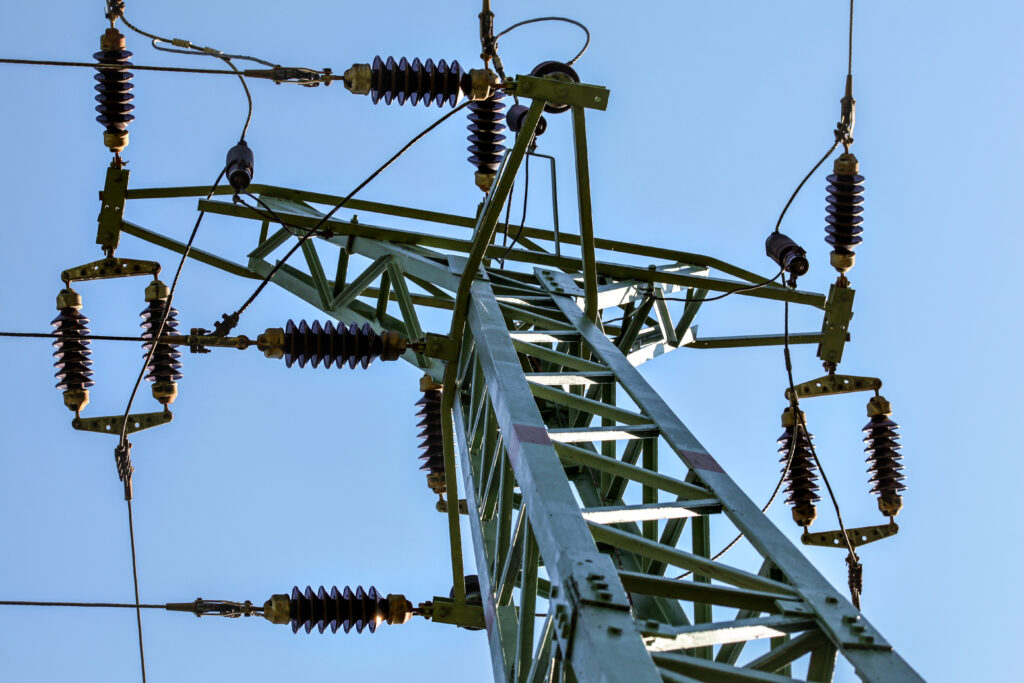
Power Quality Parameters & Measurements
A) System Voltage (RMS)
Evaluates voltage levels to identify overvoltage, undervoltage, voltage sag, voltage swell, and voltage dip. Both phase voltages and line voltages are captured during analysis. Overall voltage stability issues affecting electrical system performance is being measured and analysed.
B) System Current (RMS)
Measures both line currents and phase currents are being captured, Measured current flow is to detect overloading, imbalance, and abnormal operating conditions.
C) Active and Reactive Power
Analyses real and reactive power consumption to understand load behaviour and system efficiency.
D) Power Factor
Assess how efficiently electrical power is being utilised, helps in power factor improvement and hence improve system efficiency.
E) Frequency Variation
Ensures system frequency remains within acceptable limits for proper equipment operation.
F) Harmonic Measurements
Catches voltage and current harmonics under normal load operating conditions, analysis of individual harmonic orders and total harmonic distortion (THD) are included.
G) Flicker
Evaluates rapid voltage fluctuations that may cause visible light flicker and may disturb sensitive equipments.
H) Transients and Surges
Detects short-duration, high-energy voltage spikes and switching transients that can damage sensitive electronic equipment.
Important Note
Please note that for accurate power quality analysis, updated Single Line Diagrams (SLD) and relevant equipment manufacturer datasheets are required from the client side in order to ensure correct system understanding.
Standards & Reporting
Collected data is then analysed in line with internationally recognised standards (IEEE 519) deviations are then identified and assessed accurately.
The final report will have clear findings, trend analysis, severity assessment based on standards and practical recommendations to improve power quality and hence electrical system performance.
Key Benefits
Support the preventive, periodic maintenance and maintenance scheduling to ensure the continuous and reliable operation.
Ensure the electrical systems compliance with various standard & local regulations.
Improving equipment liability by identify the issues like harmonics, surges & transient, voltage dips.
Energy savings & reduce the utility expense – identify the losses caused by poor power factor, unbalanced load & Harmonics.
Lower maintenance & repairing cost.
A safe working environment by early identifying the electrical hazards.
Why Choose Us in Dubai
Our approach to power quality analysis is hands-on field experience and a clear understanding of how electrical systems operate under real conditions. We focus on long-term monitoring rather than short inspections, ensuring that intermittent and load-dependent issues are accurately captured. Based in Dubai, we are familiar with the region’s operational challenges, high ambient temperatures, and continuous load demands. Our engineers provide the clear, technical, actionable reports to support maintenance planning, system optimisation, and compliance requirements – To improve the electrical systems to safe, continuous, reliable, and efficient operation.