
Table of Contents
Electrical Engineering Activities
Electrical Installation & commissioning is an entire process of build the electrical systems and verify that the installed system complies with the approved design. This includes Installation of equipment, wiring, connecting, terminating components, earthing systems, operational testing and verifying that all the process are functioning safely, reliably & efficiently according to the design specification and standard.
In the UAE, electrical installation works are applicable for all facilities like residential & commercial building, hospitals, schools, shopping malls, hotels, data centers, warehouses, industrial plants, pumping stations and infra structure projects – street lighting, transport facilities, each requiring compliance with local authority such as DEWA, ADDC, TAQA, SEWA, FEWA. Each facility demands specific electrical design, installation, testing & commissioning and safety systems to confirm the efficiency, reliability and compliance with UAE electrical codes and international standards (IEC, BS)
Electrical Installation
Electrical installation is all about setting up the electrical systems and components as per the approved design. A proper electrical installation is important for your safety, reliability and efficacy for your electrical system
- Switchgear & Panel Installation: Positioning, mechanical installation and connecting the cables of distribution boards, MCC panels, control panels, and switchgear.
- Cable Laying & Termination: Installation of cables such as power cables & control cables, laying the cables through conduit and trays, proper termination with torque test as per the specific standard at panels & equipment.
- Earthing & Lightning Protection: Installation of earth pits and earth conductors, installation of lightning arresters to ensure safety of working personnel and equipment.
- Lighting & Power Systems: Adequate Fixing of lights, sockets, and switches as per approved drawings.
- Equipment Installation: Proper Placement and connection of equipment such as transformers, generators, motors, and HVAC electrical components.
- Labeling & Documentation: Suitable identification label is mandatory for cables, electrical components, circuits & panels. Also, complete installation & maintenance records shall be documented for future reference.
Electrical Commissioning
Once installation process is complete, commissioning just ensures the system works correctly before its being handed over for use.
Commissioning procedure is listed out in the following steps:
- Pre-commissioning Inspection: Pre commissioning process includes
- Verify the connections
- Check insulation resistance value
- Verify polarity and phase sequence
- Functional Testing: Operation of lighting systems, control circuits and protective devices (Such as MCBs, relays, breakers) are checked for its functionality.
- Load Testing: It is performed by running the system under actual load condition or simulated load conditions to confirm the performance and stability.
- Calibration & Settings verification: Adjustment of protection relays, meters, and control devices to its own design parameters so that they are calibrated and ready to operate.
- System Integration: This step will ensure smooth coordination between electrical and mechanical systems (e.g; HVAC, fire alarm, automation).
- Final Verification & Documentation: In this step we do preparing test reports, as-built drawings, and operation manuals based on commissioning process.
Electrical Maintenance
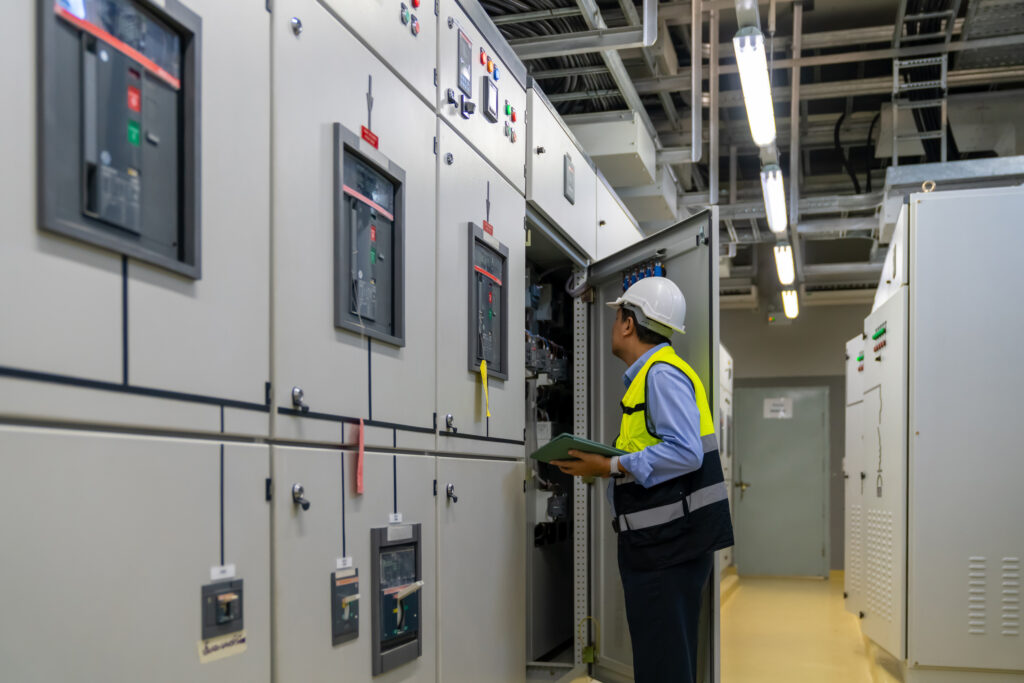
Electrical maintenance, As the term indicates electrical maintenance refers to systematic inspection, testing, servicing, and repair of electrical systems and equipment. So that we guarantee electrical systems are safe, efficient, and reliable. What exactly involved in electrical maintenance is checking all electrical components—such as switchgears, panels, transformers, cables, motors, and lighting systems and alterations if any damages observed. There by helps to detect early signs of wear, overheating, or any kind of malfunction.
Tasks like tightening loose connections, cleaning contacts, measuring insulation resistance value, verifying circuit protection devices and calibrating relays or meters falls under regular electrical maintenance service. It also involves preventive actions such as replacement of damaged components, testing of earthing systems and thus ensuring compliance with electrical safety standards.
The primary goal of electrical maintenance is to prevent unexpected breakdowns, extend equipment lifespan, improve energy efficiency, and ensure personnel safety and safety of properties too. A Well-planned maintenance helps in minimizing the count of unplanned downtime, reduces repair costs, and helps maintain a continuous and reliable power supply across residential, commercial, and industrial facilities.
Upgradation of Electrical System
Upgradation of an electrical system involves modernizing or enhancing the existing electrical infrastructure to improve safety, efficiency, reliability, and capacity.
What kind of activities included in this process? Activities such as replacement of outdated components, increasing load capacity, integrating smart technologies, and ensuring compliance with the latest electrical standards and regulations.
The scope of work of an electrical system upgrade is listed below:
- Load Extension: Load extension involves upgrading the existing electrical infrastructure to accommodate increased power demands efficiently and safely.
- Panel Board Replacement: Installation of new distribution boards, breakers, and protection devices with higher capacity or accommodating advanced safety features within them.
- Cabling & Wiring Upgrade: Replacing old or undersized cables with high-quality cables to make sure that they are properly rated conductors to handle increased electrical loads safely.
- Earthing & lightning Protection Systems: Improved grounding and lightning protection systems are compulsory to ensure personnel and equipment safety.
- Energy Efficiency Enhancements: Incorporating energy-saving devices such as LED lighting, power factor correction systems, and smart energy meters as energy efficient technologies and there by stay updated with new trends.
- Automation & Control: Integrating building management systems (BMS), programmable logic controllers (PLCs), or smart sensors for improved monitoring and control.
Electrical system upgradation is essential for facilities experiencing load growth, frequent power issues, or compliance requirements. It minimizes downtime, reduces energy costs, enhances performance, and ensures the installation meets current safety and operational standards.
Electrical preventive maintenance
This is a proactive approach to maintain the electrical systems and equipment by performing regular inspections, testing, and servicing before a failure occurs. By scheduling proper maintenance activities at planned intervals helps the facilities in detecting potential issues early and can reduce downtime, extend equipment life, improve energy efficiency, and ensure compliance with safety regulations such as Dubai Electricity & water Authority (DEWA), Abu Dhabi Distribution Company (ADDC), or international standards (IEC, NFPA).
Activities such as checking insulation resistance, tightening connections, cleaning switchgears and panels, testing protective relays, verifying grounding and bonding, inspecting circuit breakers, and monitoring load balance and voltage levels. Also, inspections like infrared thermography and other diagnostic tools are often used to identify overheating or loose connections without shutting down the system. In summary, electrical preventive maintenance program enhances reliability, safety, and performance.
Switchgear & Control Panels
We provide comprehensive solutions for switchgear panels such as MDB (Main Distribution Board), SMDB (Sub Main Distribution Board), DBs (Distribution Board), Capacitor bank panel, Automatic transfer switch (ATS) panel, Generator Synchronizing Panel, Motor control panels, DOL, Star-delta, VFD & Soft starter panels, PLC based Panels, Control Panels & Relays, UPS Systems & Backup Power Units. Our team concentrate in designing, installation and commissioning low voltage systems with maximum precision, so as to ensure optimal performance, power factor correction, and provide system reliability. All installations should comply with international standards, that is why we deliver safe, efficient, and durable electrical solutions for industrial, commercial, and utility applications.
Inzpire Technology LLC
Inzpire Technology LLC ensures that all electrical systems are designed, installed, and tested in accordance with approved standards and safety regulations. Our services are performed by qualified and certified technicians, also it guarantees proper wiring practices, accurate load distribution, effective earthing, and reliable protection systems. Certified installations have less chances or risk of electrical faults. Thus, enhances system efficiency, and ensure compliance with local authority requirements such as Dubai Electricity & water Authority (DEWA) or Abu Dhabi Distribution Company (ADDC). We use approved materials and follow a standard procedure for conducting thorough inspections and testing. Our services cover both commercial and residential projects, deliver efficient and compliant power systems for every project.
Safely installed electrical panels and wiring assures reliable and hazard free operation of the entire electrical system. The process may involve using high-quality cables, proper circuit protection devices, and accurately rated panels installed in compliance with electrical safety standards. Also, if all wiring connections are securely terminated, have proper insulation and neatly arranged, then issues such as overheating, short circuits, or any kind of accidental contact will be eliminated. Panels equipped with proper protective devices such as MCBs, ELCB and surge protectors to safeguard your system against overloads and electrical faults. Proper earthing, cable labeling, and proper ventilation are also maintained and they have important role in providing safety and simplify maintenance. Overall, a professionally executed installations which are safety-compliant will have minimum risk of electrical fires, equipment damage, personal injury while they ensure long-term reliability and efficiency.