
Table of Contents
Industrial Automation
Inzpire technology LLC offers reliable, innovative, intelligent and cost-effective automation technologies and electrical solution for modern industries. We provide complete automation solutions, including design, installation, programming, testing and commissioning for modern industrial operations.
We specialize in SCADA system implementations, PLC & HMI programming, electrical control panel design and fabrication, VFD & motor control panels and synchronizing of generators and full-scale electrical infrastructure development.
SCADA, PLC & HMI programming
PLCs, SCADA, and HMIs play the main role in process of industrial automation and advanced system design. They enable process control, real time monitoring, data acquisition, remote control and advanced system management allowing industries to improve operational efficiency, increase the productivity and maintain high standard of safety and reliability
PLCs –
A Programmable Logic Controller (PLC) is a specialized computer that automatically controls industrial machine based on the programmed instructions. Its primary function is to automate & control various process harsh environments such as factories, power plants, pumping stations, water treatment industries and manufacturing facilities.
A PLC receives signals from field devices such as sensors and switches connected to it, executes the program based on stored instructions, and controls the output devices.
SCADA
Supervisory Control and Data Acquisition (SCADA) is a computer-based system used to monitor & control large scale industrial process in real time.
Scada systems collect the data from field devices such as sensors, instruments and machines and it display on the HMI screens through graphical interfaces, generate the alarm for abnormal conditions and store the historical data. This allows to the operator to make the required decision and control the facility in real time. They are widely used in industries such as water treatment, power distribution, building management and manufacturing
In basic terms SCADA provides centralized monitoring and control the industrial system to ensure efficient, safe and reliable operation
HMI
Human-Machine Interface (HMI) is a system that visualize the real time data from the PLCs and Sensors. It provides a visual representation of equipment, process status, system data and making it easy to control the operation
HMI displays the real time information such as temperature, pressure, motor status, alarms and production data. Based on this information, operators can start & stop the equipment, adjust settings, acknowledge the alarm and monitor the system performance
HMIs are commonly used in industries such as manufacturing, power plants, water treatment facilities, and automation systems.
VFDs - Variable Frequency Drives
VFD panels (Variable Frequency Drive panels) are enclosed industrial control systems that controls the speed & torque of electric motors by adjusting input frequency & voltage. It helps improve energy efficiency, reduce mechanical stress, smooth motor starting and stopping and enhance process control in applications like pumps, fans, conveyors, and compressors where precise speed control is required
Key Features –
- Speed Control: Adjusts motor speed based on demand.
- Energy Efficiency: reduce power consumption, resulting lower electricity cost
- Soft start & stop: Eliminate inrush current, minimize the mechanical stress & wear on motors & belts
- Protection: protect the motor from over current, overheating and voltage issues
- Reduced Maintenance: Preventing sudden mechanical shocks & stress, the overall service life of the equipment is significantly extended.
- Programmable operation – provides customized speed control, acceleration, and deceleration settings.
- Built-in monitoring and diagnostics – Display key operating details such as speed, current, and fault conditions.
- Communication capability – Can be connected with PLC, SCADA, or automation systems.
- Improved Process Control: Maintains constant motor speed regardless of load variations.
A standard panel includes a VFD drive, cooling fans, circuit breakers, harmonic filters, and human-machine interface (HMI) controls & an enclosure with in NEMA/IP-rated, vented, or air-conditioned cabinets to protect against harsh environments (dust, moisture, heat).
VFD panels are widely used across various industries such as water treatment plants, HVAC systems, residential & commercial building, manufacturing & industrial units for controlling the fans, blowers, maintain the pressure in pumps, driving conveyers, mixers, and industrial machinery
VFD Installation & Maintenance Services
Inzpire Technology LLC provide professional VFD (Variable Frequency Drive) installation and maintenance services in UAE, to ensure reliable and efficient motor control for industrial operations. Our technical team performs proper panel mounting, cable laying, glanding & termination, parameter configuration, necessary programming, testing & commissioning to ensure stable operation & optimized drive performance
We are providing preventive maintenance services comprising cleaning & dust removal, connection tightening, cooling system inspection, and fault monitoring, helps prevent downtime, reduce energy consumption and extend equipment life. We are expert in guaranteed VFD (variable frequency drive) repair, troubleshooting & replacing damaged components
With our expert VFD solutions, your motors and systems operate smoothly, efficiently, and with minimal wear and tear.
Synchronizing of Generator
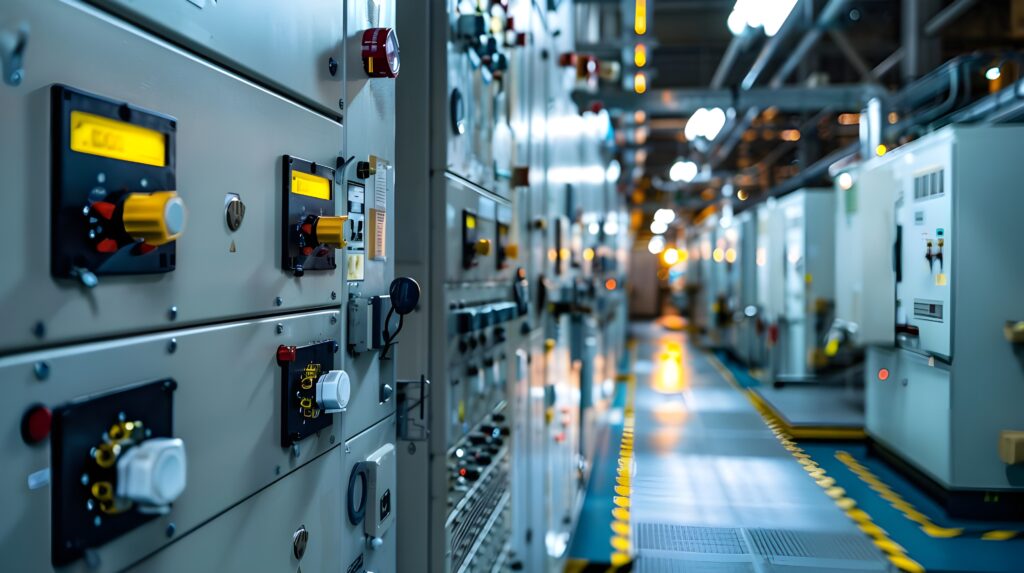
Generator synchronizing is the process that connecting multiple generators to operate together on the same electrical power system. Before connecting the generators parameters like system frequency, voltage, phase angle, the waveform of the alternator, and phase sequence are must be matched. Once all parameters are synchronized with other generators, alternators or bus bars the power system is ready to run parallel and safely. Generator synchronization allows load sharing, increase capacity, enhance reliability, enable continues power supply, operational efficiency and prevents issues such as circulating currents, mechanical stress, or equipment damage.
Types of Generator Synchronization: the common methods are manual synchronization, synchroscope synchronization, and automatic synchronization. In traditional manual synchronization or lamp method, a skilled operator performs the synchronization by observing instruments using the lamp method, where the lamps are connected between the generator and the busbar to indicate phase and frequency matching and manually controlling the generator. Synchroscope method uses an analog instrument that visually indicate the phase & frequency between the incoming generator and system. It helps the operator to determine the correct movement to connect & close the generator safely. This method is more accurate and reliable than Manual (lamp) method. Automatic Synchronization
In modern power systems, synchronization is often performed automatically. Digital generator control modules (from manufacturers like Cummins Power Command, Woodward, DEIF, DEEP SEA etc.) can control engine speed and excitation and issue the close command once sync conditions are met. These controls continuously monitor the difference in frequency (slip rate), voltage, and phase. Some systems even calculate an advanced angle to trigger the breaker slightly before perfect alignment, accounting for the breaker closing time, so that by the time the contacts touch, the phase angle is nearly zero. This level of precision is difficult to achieve manually, especially for large generators, which is why automatic synchronizers are prevalent in modern installations.
Inzpire Technology LLC offers reliable generator synchronizing solutions designed to ensure smooth and stable power operation. Our services include synchronization of multiple generators for efficient load sharing and uninterrupted operation. We provide expert installation, testing, and programming tailored to meet project requirements. With a focus on safety and performance.
Configuration & Commissioning of control panels
Inzpire Technology LLC offer expert service in control panel installation, configuration, testing & commissioning including advanced automation solutions. Testing and commissioning procedures are essential to ensure the reliability and safety of industrial control panels. This process is mandated by various industry standards and serves as a critical step in verifying that all electrical connections, protective devices, and control functions are properly configured before the system is placed into operation.
Preliminary Inspection: detailed inspection of panels including verification of wiring, component rating & installation, labeling and compliance with approved drawing and standards
Functional Testing: Carried out to check the performance of all components such as relays, breakers, PLCs, meters, and protection devices. Verify the all control logic as per the approved drawing and sequence of operation. This includes simulation of input and output signals to confirm correct logic operation, interlocks, and alarm functions. Insulation resistance tests, continuity checks, and power supply verification are also performed to ensure electrical integrity.
Commissioning: Commissioning is the final stage of the project where the control panel is energized and verified under actual operating conditions to ensure proper performance. This process includes verify installation complies with approved drawings and specifications, ensure all pre-commissioning checks and test reports are completed, calibrate instruments, sensors, and protection devices, verify power supply parameters (voltage, current, frequency), the system is tested with connected equipment such as motors or pumps to validate control logic, alarms, and safety functions. Communication with PLC, SCADA, or other automation systems is also verified.
Documentation: Proper documentation, including test reports and commissioning records, is prepared to confirm that the control panel meets project specifications and is ready for safe and efficient operation.
Retrofit & Upgradation of control system
Retrofit and upgradation involve modernizing existing control systems and automation infrastructure to improve performance, reliability, and efficiency without replacing the entire setup The process begins with a detailed site assessment to evaluate the current system condition, identify obsolete components, and understand operational requirements. Based on this evaluation, an upgrade strategy is developed to replace or integrate components such as PLCs, HMIs, relays, drives, and protection devices with modern, high-performance alternatives.
Engineering design is carried out to update control schematics, panel layouts, and system architecture while ensuring compatibility with existing field equipment. The upgrade may include implementation of advanced automation features, improved control logic, remote monitoring through SCADA or BMS systems, and enhanced communication protocols. Safety systems are also reviewed and upgraded to comply with current industry standards and regulations.
The objective is to extend the system’s lifespan, reduce downtime, and ensure compliance with current industry standards. Proper assessment, design modification, installation, testing, and commissioning are carried out to ensure a smooth transition with minimal disruption to ongoing operations.
Field service automation
Field service automation focuses on digitizing and optimizing field operations through integrated control systems and smart technologies. It enables seamless coordination between field technicians and central control by providing real-time data access, automated workflows, and instant communication.
The system allows automated fault detection, work order management, and service tracking, ensuring faster response and efficient issue resolution. With the use of mobile devices and cloud-based platforms, technicians can access system information, update job status, and generate reports directly from the field.
By improving accuracy, reducing manual processes, and enhancing visibility of operations, field service automation helps increase productivity, minimize downtime, and ensure consistent and reliable service delivery.